PlanPal


My Role
Learning Experience Design
As part of a two-person team, I contributed across research, learning strategy, concept development, product design, and user testing. My role focused on turning learner insights into design goals, defining the learning flow, designing the UI, shaping key features, prototyping the core experience in Figma, and supporting testing and refinement.
Team
Yixuan Wang, Product Designer
Kai Qiu, Learning Engineer
Timeline
Jan. 2024 - Apr. 2024
OVERVIEW
From Goal Intention to Guided Action
PlanPals: Motivate, Learn, and Achieve with Personalized Goal Gurus
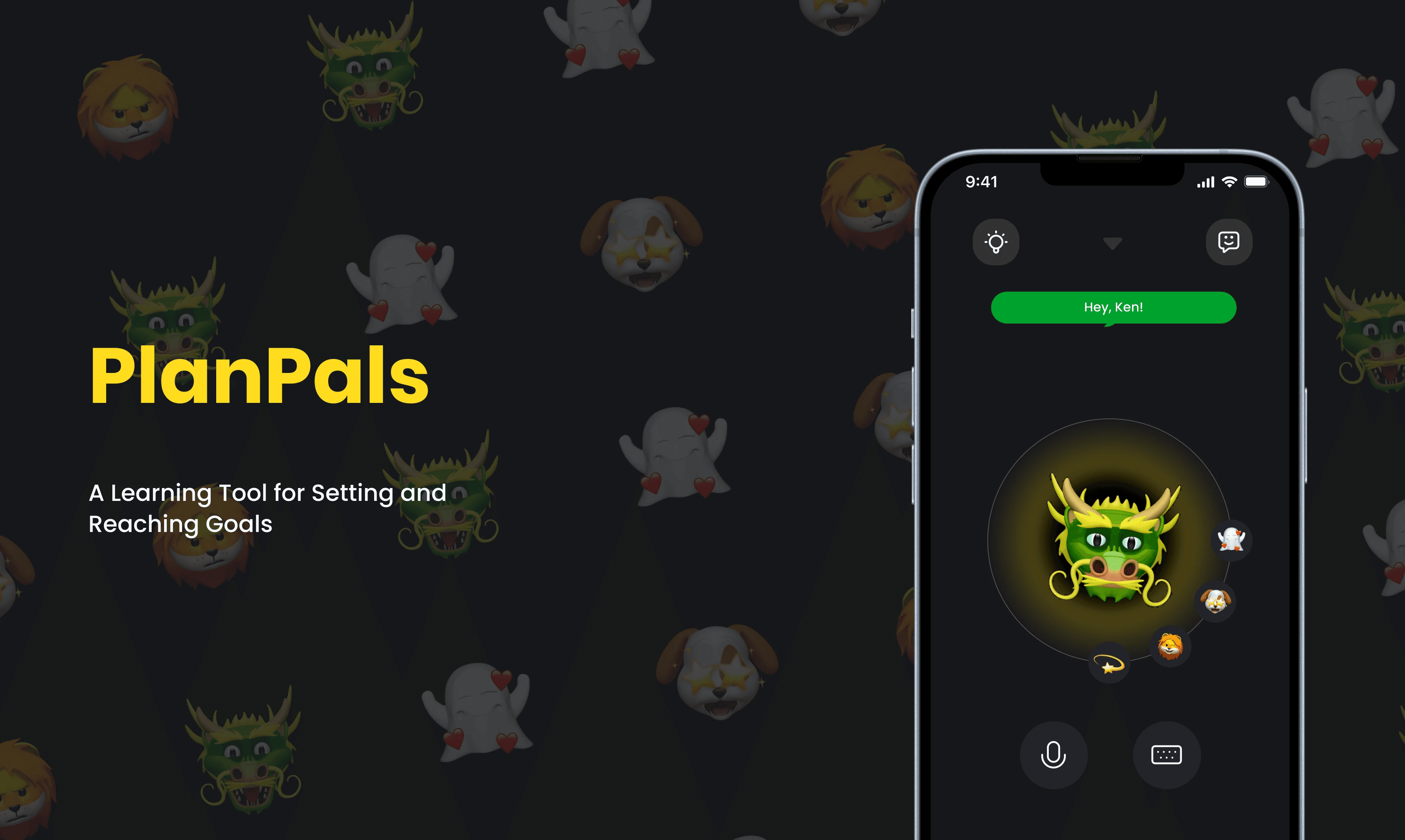
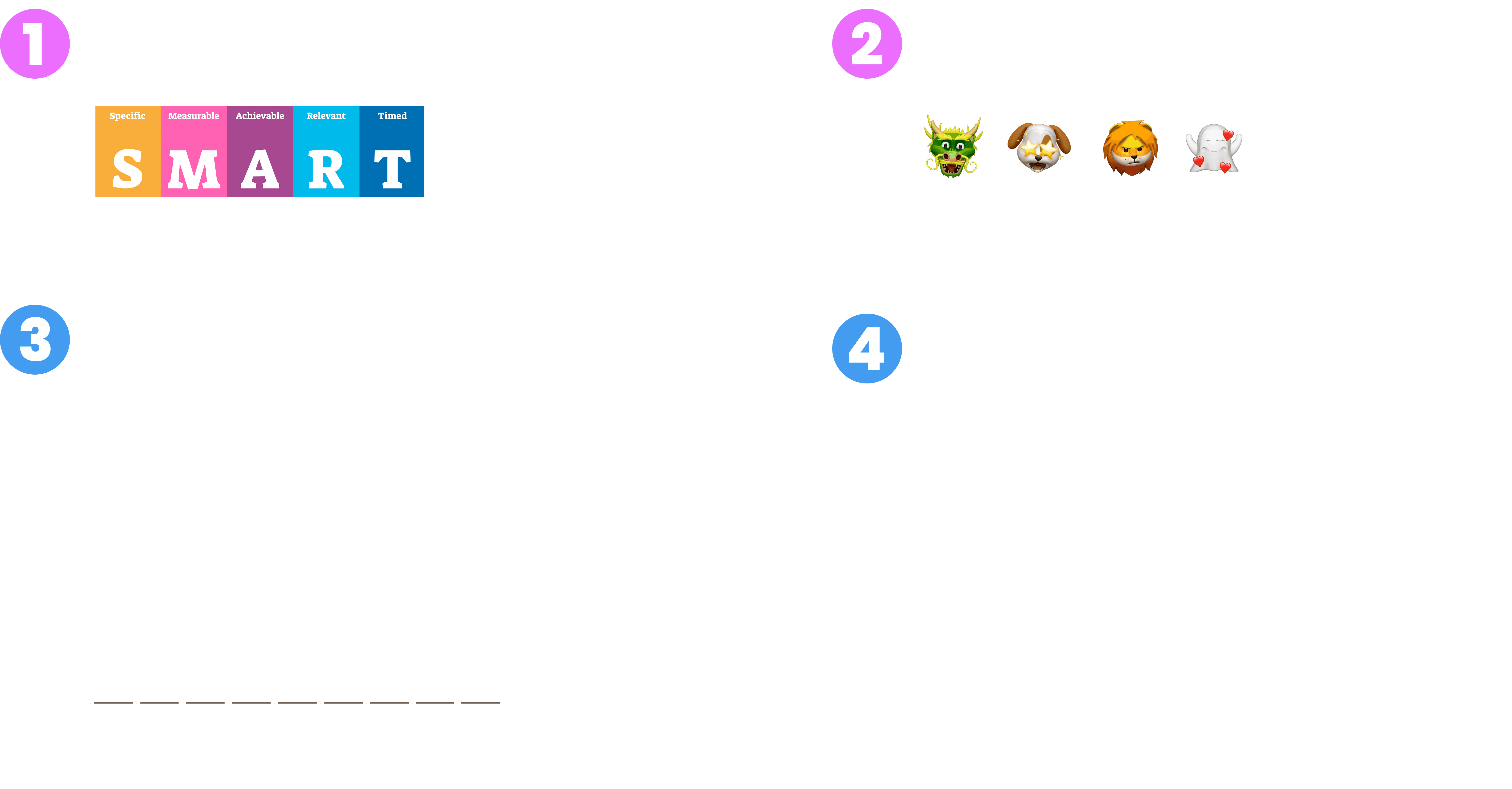
PlanPal is an AI-powered learning tool that helps users set and achieve personal goals through personalized guidance and motivation. It introduces 4 AI coaches, each with a unique interaction style, to support different user needs. Through SMART goal-setting techniques, tailored feedback, progress tracking, and adaptive learning experiences, PlanPal helps users make their goals more actionable while staying engaged and committed.

PROJECT CONTEXT
Why Do Personal Goals Often Fail?
Example: Fitness Goals
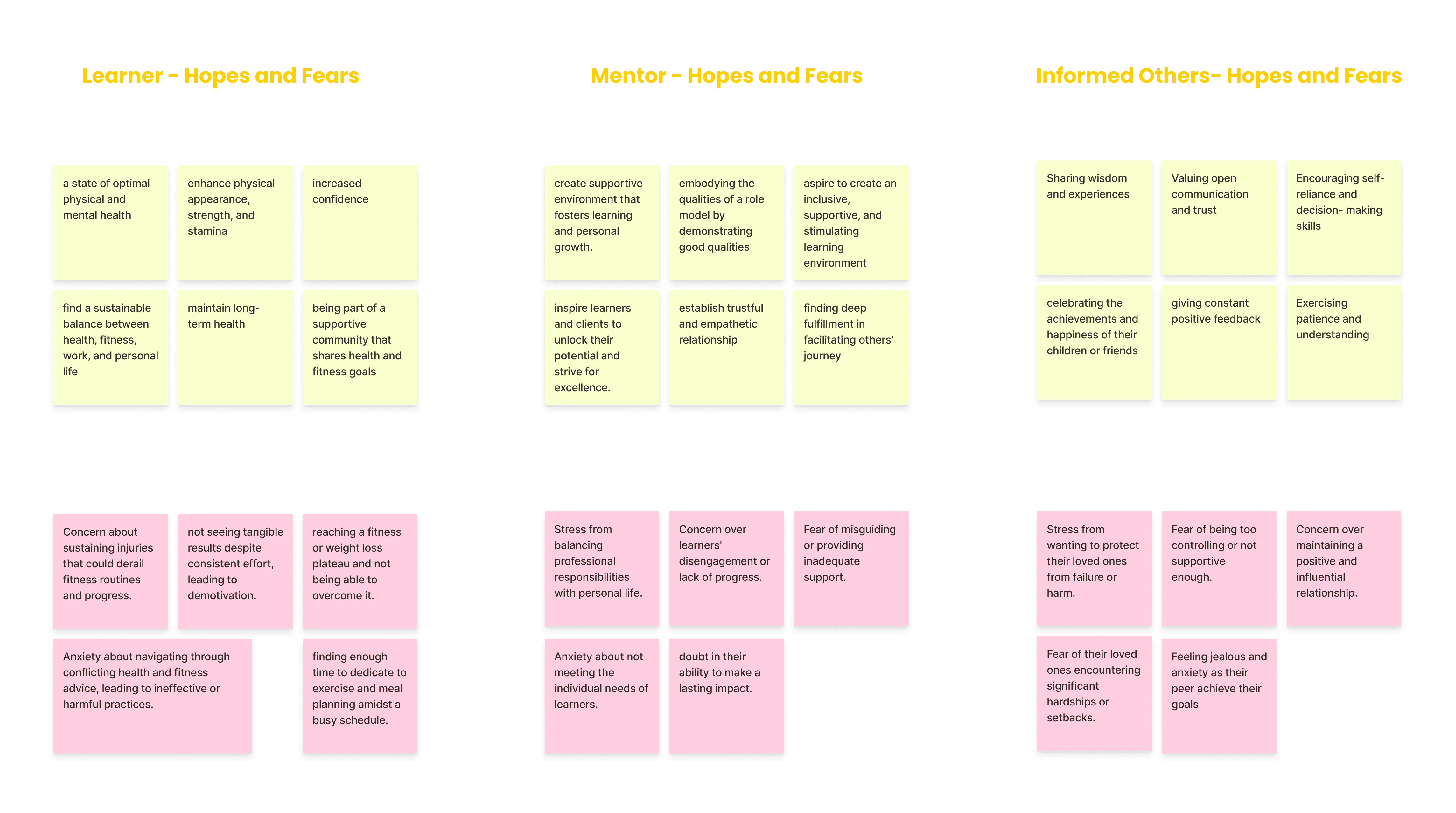
People find it hard to move steadily toward long-term goals. Many individuals begin fitness or health goals with strong motivation, especially around New Year’s resolutions, but often struggle to follow through over time. The challenge is not only about willpower.
Bridging The Gap
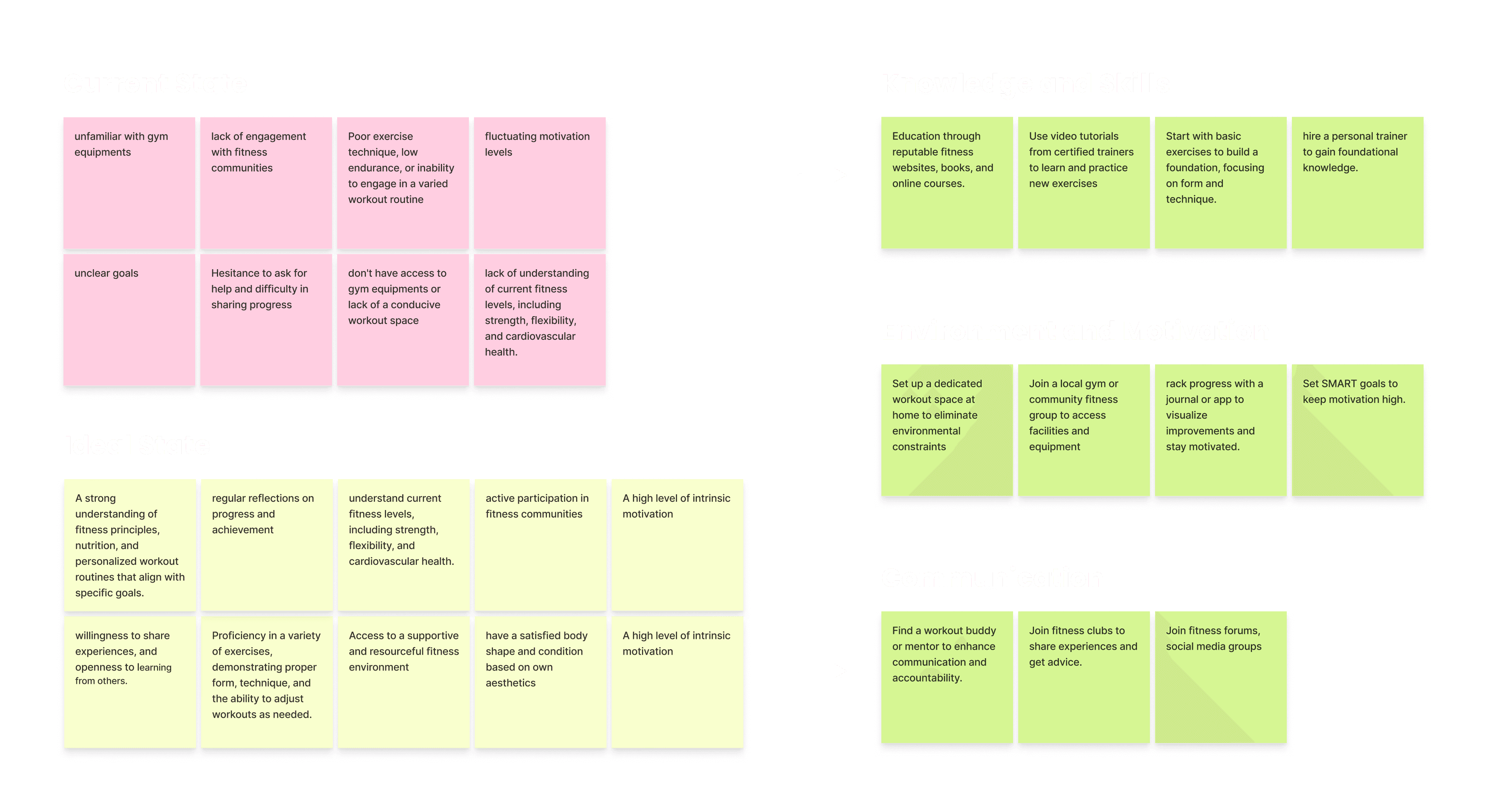
Our research revealed a gap between users’ current state and ideal state: they want to become healthier and more confident, but often lack the knowledge, structure, and motivation to keep going. This became the design opportunity for PlanPal: helping users learn how to set achievable goals, break them into smaller actions, and stay supported throughout the journey.
LEARNER RESEARCH
Understanding Different Motivation Patterns
Interviews
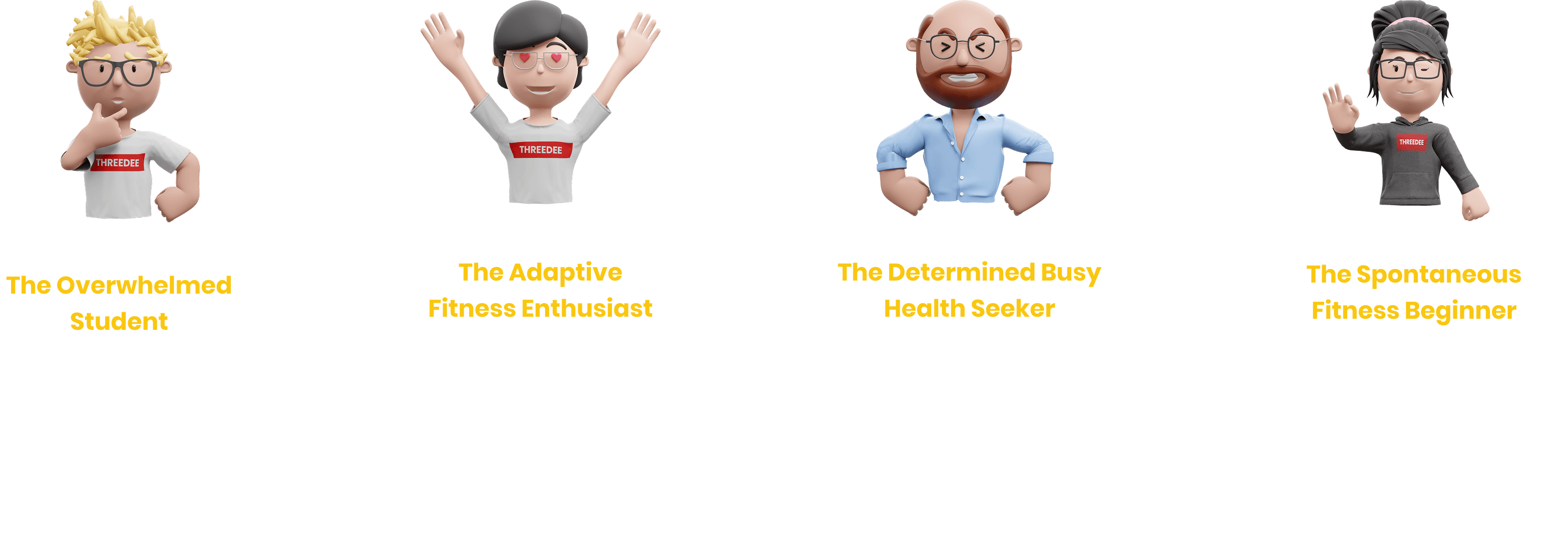
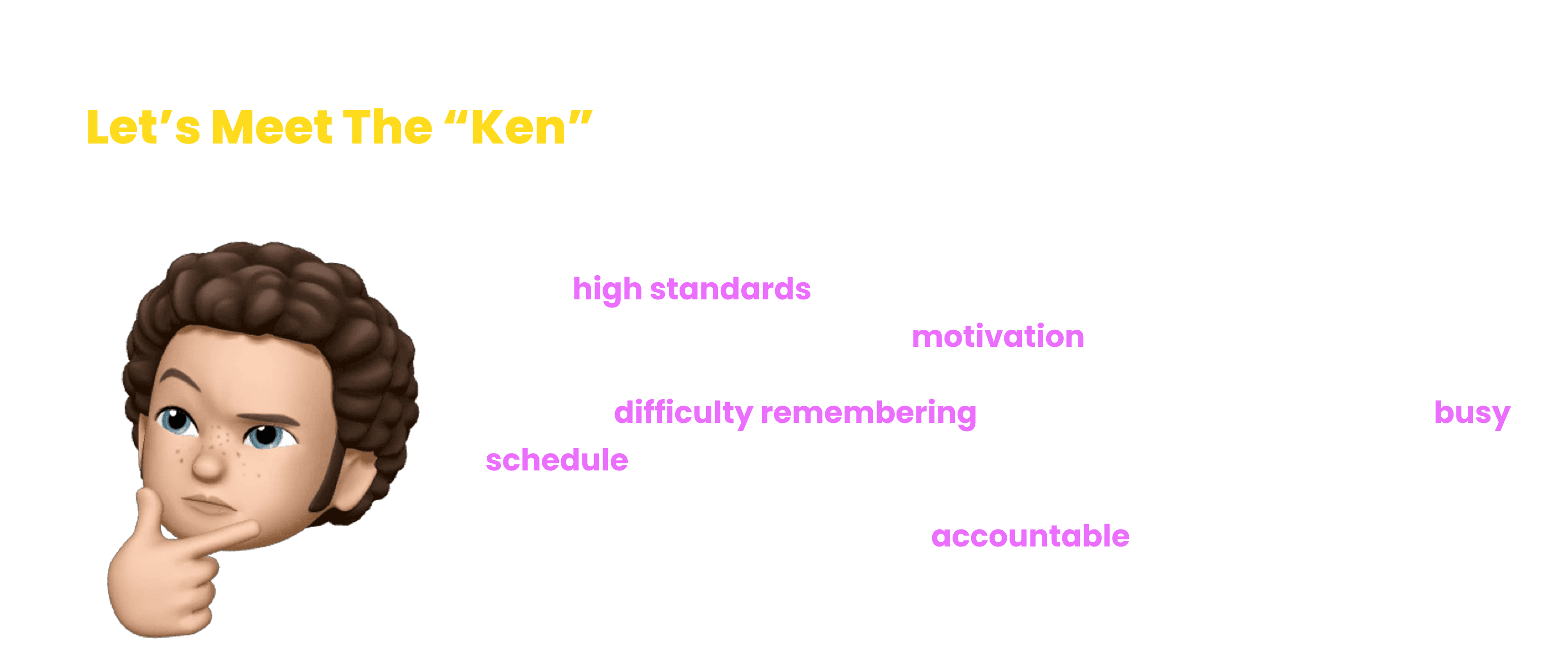
Through interviews, we found that users face different barriers when working toward fitness goals, including execution, routine-building, slow progress, and consistency. This highlighted the need for a personalized learning experience that helps users set achievable goals, break them into smaller steps, and stay motivated over time.
DESIGN OBJECTIVES
Learn, Set, Achieve and Sustain
The Four Steps
After identifying the learning gaps behind long-term goal failure, we defined PlanPal not just as a goal-tracking tool, but as a learning experience that teaches users how to set, break down, and sustain personal goals. PlanPal should help users move from vague intentions to structured actions by teaching goal-setting techniques, supporting motivation, and guiding them through continuous reflection and progress.
DESIGN APPROACHES
Backed Up By Learning Science
Strategy
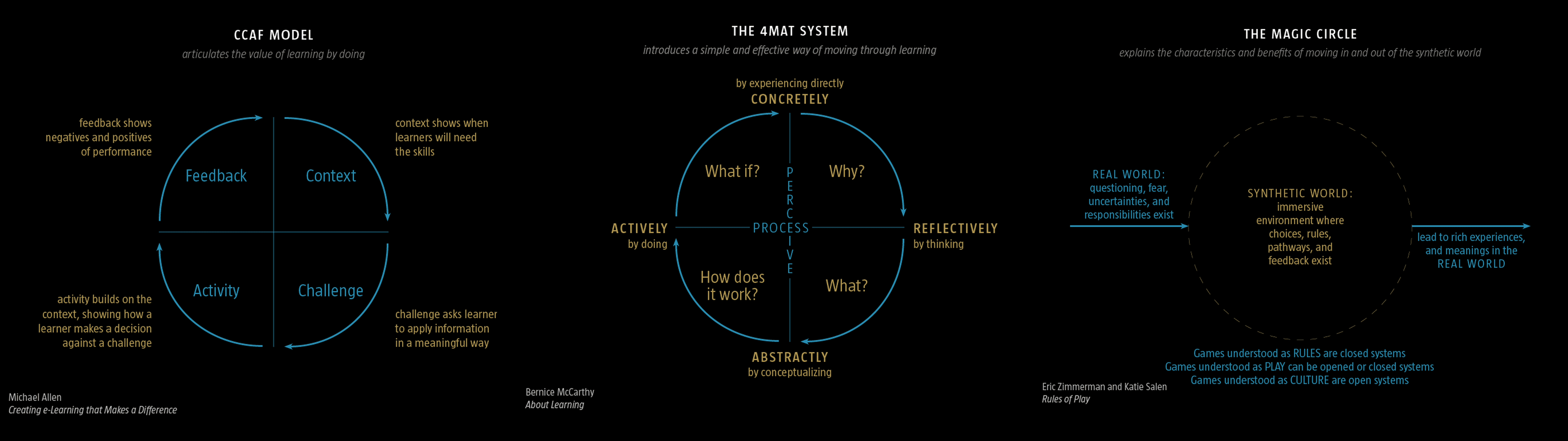
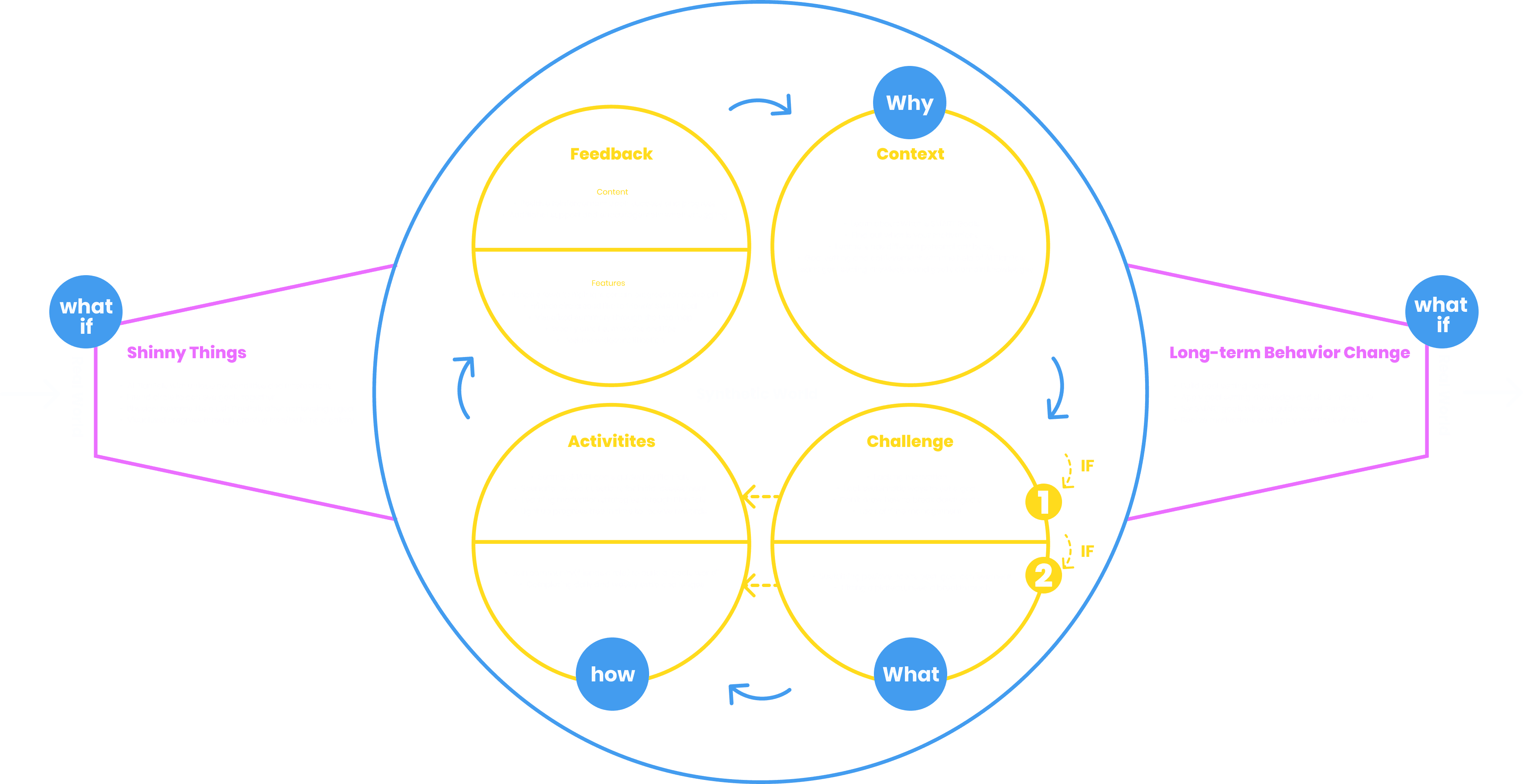
PlanPal’s learning experience is grounded in CCAF, 4MAT, and the Magic Circle concept. CCAF shaped the core loop of context, challenge, activity, and feedback; 4MAT helped us support different learning preferences; and the Magic Circle concept guided us to create a focused, playful learning space where users can build goal-setting habits, practice self-regulation, and gradually transfer these behaviors into their real lives.
User Journey
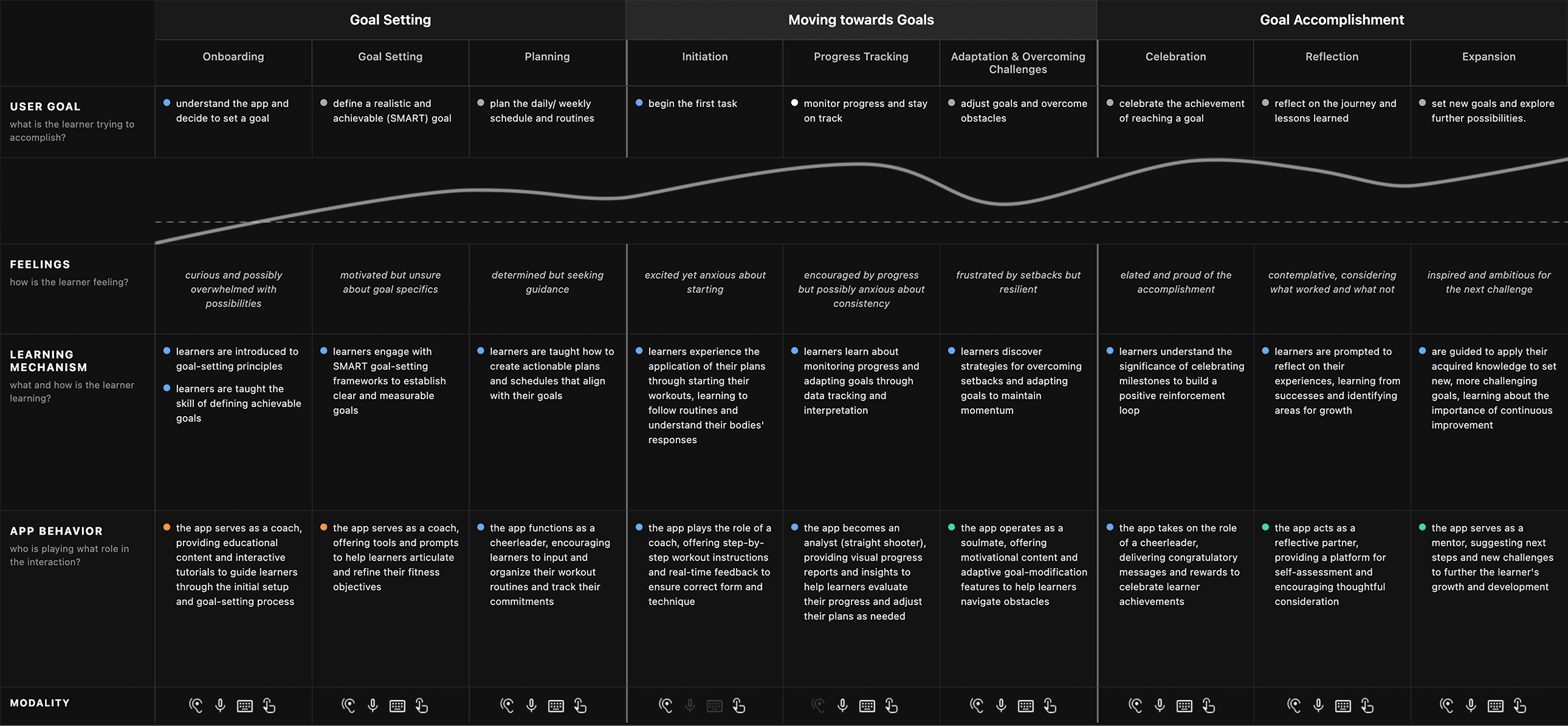
The journey connects each learning objective with a product touchpoint, helping users move from initial goal setting to daily practice, feedback, reflection, and long-term habit formation.
KEY FEATURES
Designing the Core Experience
Home Screen
On-Boarding
Attracting Attention (surprise/shiny things)
On-Boarding
Clarifying Learning Objectives (establishing priorities)
Goal Setting
Cycle of Practice and Feedback
Principle of Motivation (expectancy/value)
Planning
Structured Flow of Goals
Scaffolding the Learning Incline
Moving Towards Goals
Cycle of Practice and Feedback
6 Facets of Understanding
Moving Towards Goals
Aiding Memory (encoding/chunk/group/retrieval)
Learner Diversity (push/pull/novice information)
Moving Towards Goals
Cycle of Practice and Feedback
Attracting Attention (surprise/shiny things)
Aiding Memory (encoding/chunk/group/retrieval)
Goal Accomplishment
The Magic Circle (real/synthetic world)
Principle of Motivation (expectancy/value)
Learner Diversity (push/pull/novice information)
Goal Accomplishment
The 4MAT System
CCAF (context, challenge, Activity, Feedback)
EVALUATION
Does AI Really Help?
User Studies
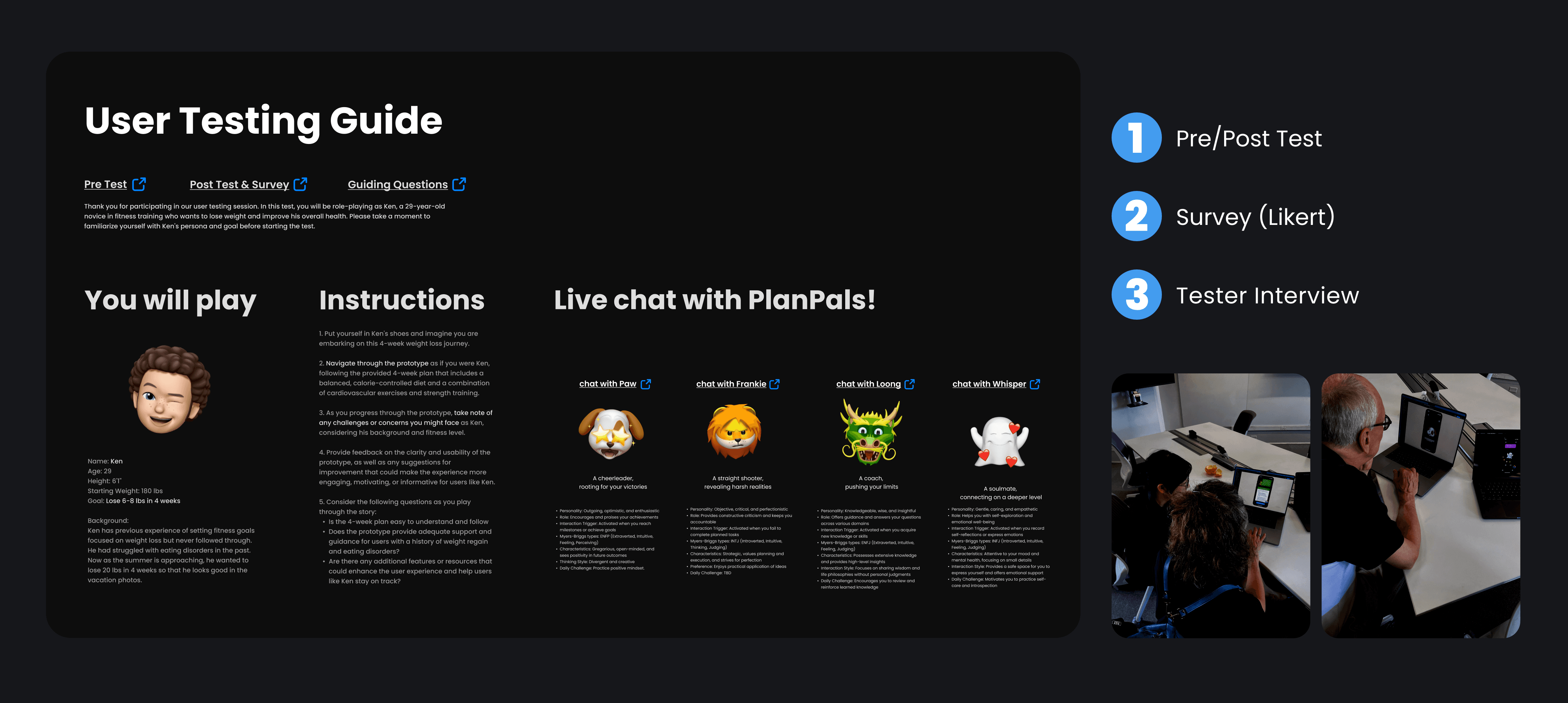
To evaluate PlanPal's effectiveness and user satisfaction, we conducted a study with 6 participants using pre/post-tests, surveys with Likert scales, and user interviews. The results demonstrate that PlanPal's AI-powered features, grounded in learning theories and principles, successfully support users in setting and working towards their fitness goals.
Survey Insights
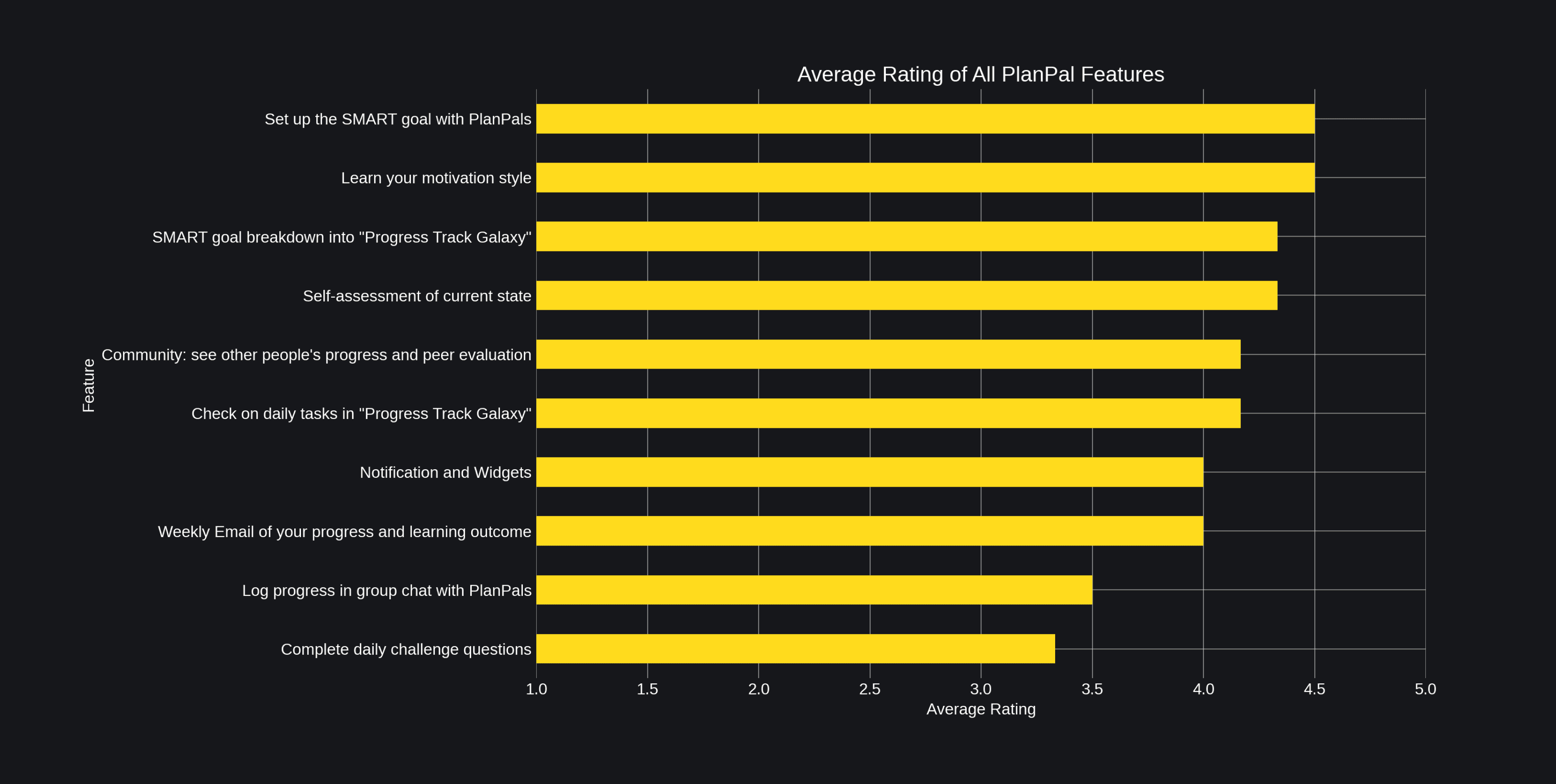
Survey data revealed that the most helpful features for goal-setting and motivation were "Learn your motivation style," "Self-assessment of current state," and "SMART goal breakdown into 'Progress Track Galaxy'". PlanPal received a high overall rating, with an average score of 4.67 out of 5 for the likelihood of recommending PlanPal to others. Users also rated PlanPal an average of 4.5 out of 5 for making long-term goals more approachable.
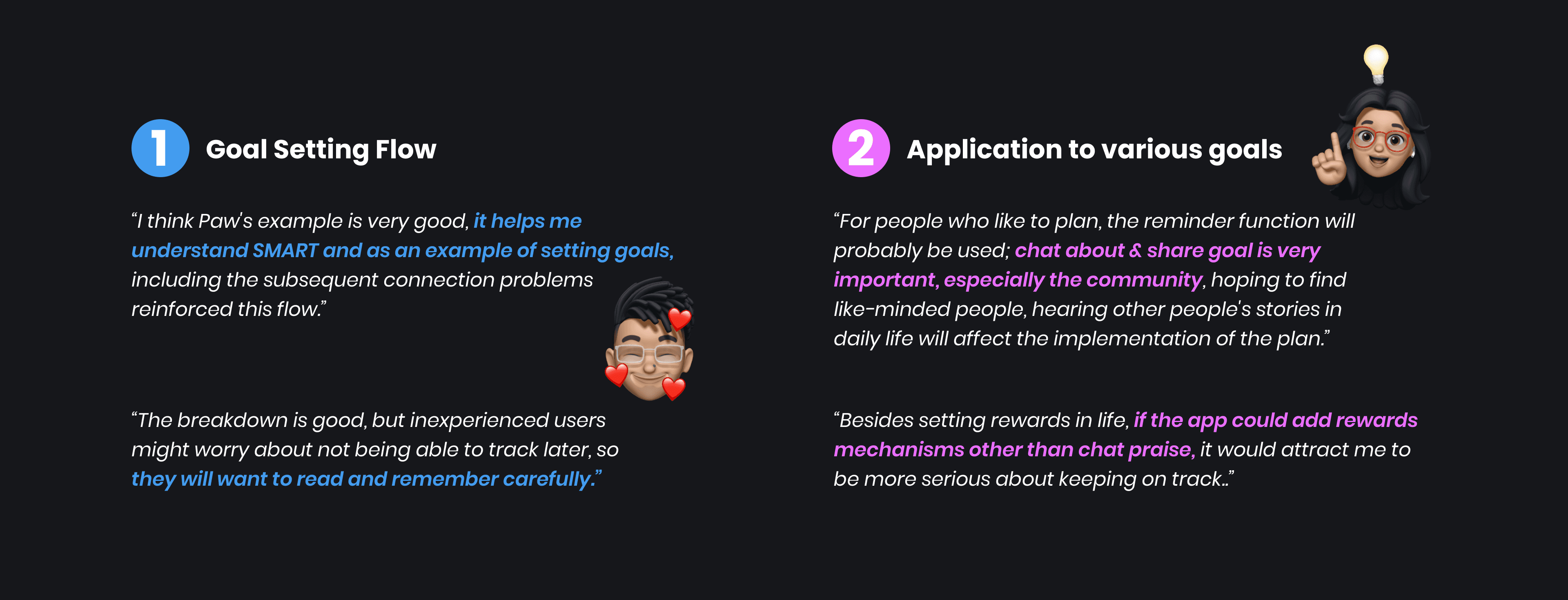
Tester Interview Insights
TAKEAWAY
Reflection: Learning in the Age of AI
What Worked
AI coaching made goal-setting feel more personal and supportive. By simulating social presence, the coaches acted like accountability partners, helping users feel more committed to their goals and more motivated to continue. This made the learning experience feel less like using a tracker and more like being guided by a supportive team.
What Could Improve
For the product, future iterations could make the goal journey more adaptive over time. PlanPal could adjust milestones based on users’ real progress, provide more flexible recovery plans when users fall behind, and offer deeper reflection prompts to help users understand why certain habits are difficult to maintain.
For evaluation, future testing could use stronger assessment methods, such as goal-quality rubrics, behavior tracking, and follow-up studies, to understand whether users actually improved their goal-setting skills and sustained their habits beyond the prototype experience.
What I learned
This project helped me explore how AI can support learning through structure, feedback, and social presence, instead of only generating answers. In PlanPal, the AI coaches were designed not just as conversational agents, but as learning companions that provide accountability, encouragement, and personalized guidance throughout the goal-setting journey.
Moving forward, I see AI’s greatest value in educational products when it is designed around learning behaviors, not just interactions. It can help learners reflect on their progress, stay motivated, receive adaptive feedback, and gradually transfer what they practice in the product into real-life habits.